📍 Proudly serving Tempe, Mesa, Phoenix, Chandler, Gilbert & surrounding areasCall or Text 24/7: 480-631-3899

Water Quality Testing: Home Tap and Well Water in Tempe, AZ

Tempe Water Filtration provides professional water quality testing for homes and businesses throughout Tempe, AZ and the greater Phoenix metro area. If your water tastes like chlorine, leaves white scale, looks cloudy, smells unusual, stains fixtures, or makes you wonder whether you need a water filter, water softener, reverse osmosis system, or PFAS filtration, the first step is testing.

Tempe water can be affected by hard water minerals, chlorine or chloramines, sediment, TDS, plumbing materials, and possible contaminants such as lead, copper, PFAS, nitrates, arsenic, and other water quality concerns. A professional water test gives you measurable information about what is actually coming from your tap before you spend money on a treatment system.

Every recommendation from Tempe Water Filtration starts with real water testing, not a generic package. We test your water, explain your results, compare filtration options, and recommend a system only when the data supports it.

Tempe Water Filtration provides water quality testing throughout Tempe and the greater Phoenix metro area, including Phoenix, Scottsdale, Mesa, Chandler, Gilbert, Glendale, Peoria, Goodyear, Avondale, Surprise, Queen Creek, Apache Junction, Paradise Valley, Fountain Hills, Cave Creek, Laveen, Ahwatukee, Guadalupe and more.

★ ★ ★ ★ ★4.9/5 Average Rating · 20+ Years of Experience · Thousands of Customers Helped · Licensed & Insured · Residential & Commercial

Water Quality Testing Services & Benefits

What Is Water Quality Testing?

Water quality testing helps homeowners and businesses understand what is in their water before choosing a filtration system. Instead of guessing between whole-home filtration, reverse osmosis, water softening, carbon filtration, sediment filtration, or PFAS treatment, testing gives you a clear starting point.

Water quality testing measures the minerals, chemicals, metals, particles, and other conditions present in your water. Depending on the test panel, this may include hardness, chlorine, chloramines, TDS, pH, sediment, turbidity, lead, copper, arsenic, nitrates, PFAS, iron, manganese, and other concerns.

Testing can be done on-site for fast readings or through lab analysis when deeper contaminant screening is needed. On-site testing is useful for hardness, chlorine, pH, TDS, and visible water quality concerns, while lab testing is better for complex contaminants such as PFAS, heavy metals, nitrates, and arsenic.

Benefits of Professional Water Testing

A professional water test helps identify the right solution for your actual water instead of relying on a one-size-fits-all recommendation. It can also help confirm whether an existing filtration system is working properly.

Benefits may include:

  • Clear understanding of what is in your water
  • Better system recommendations based on test results
  • Identification of hard water, chlorine, sediment, TDS, PFAS, lead, copper, nitrates, or arsenic concerns
  • Testing at the tap, refrigerator line, RO faucet, or other water point
  • Before-and-after water quality reports after filtration installation
  • Better protection for plumbing, fixtures, and appliances
  • Help choosing between whole-home filtration, RO, carbon, sediment, water softening, or specialty filtration
  • Better confidence in drinking and cooking water
  • Maintenance guidance for existing water filtration systems
  • Local Tempe water quality knowledge
Water Quality SERVICES

Our Water Quality Testing Service

Tempe Water Filtration provides complete water testing services for homeowners, businesses, rental properties, offices, restaurants, and commercial facilities. Our testing process is designed to identify water quality concerns and match them with the correct filtration or treatment option.

In-Home Tap Water Testing

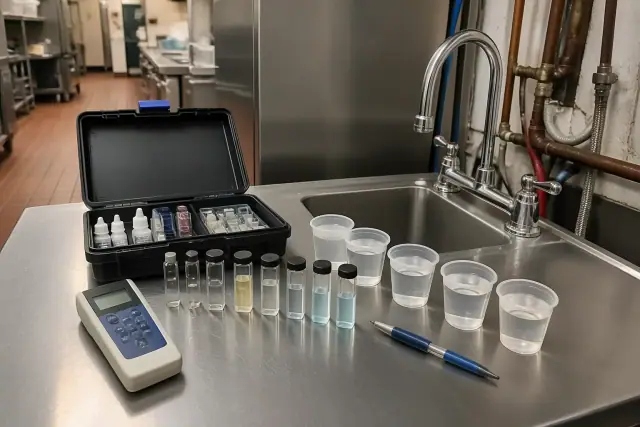
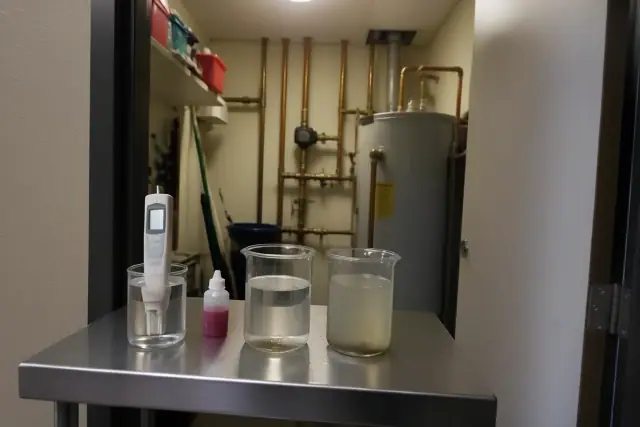
In-home water testing kit with vials and a digital meter on a stainless steel table in a Tempe, AZ restaurant kitchen.

In-home tap water testing helps determine what is actually coming from your faucet. This is different from reviewing a citywide report because your home’s plumbing, fixtures, water heater, refrigerator line, or existing filtration system can all affect water quality after water leaves the municipal system.

We can test water from the kitchen tap, bathroom tap, refrigerator line, outdoor faucet, or RO faucet depending on your concerns. This helps identify whether the issue is related to the city supply, internal plumbing, old fixtures, a filter that needs replacement, or a specific point of use.

Hard Water Testing

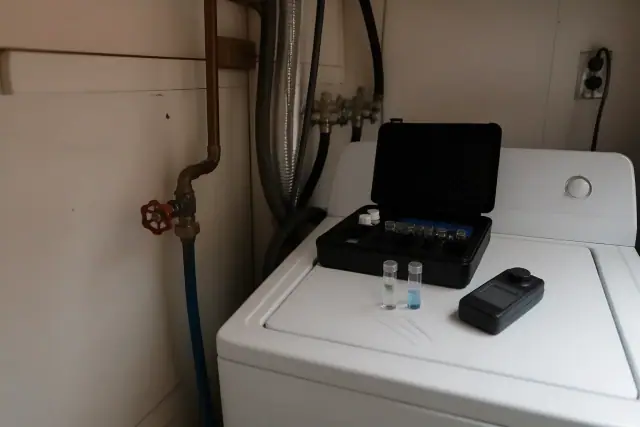
Digital water testing kit with vials and a colorimeter on a washing machine in a Tempe, AZ laundry room.

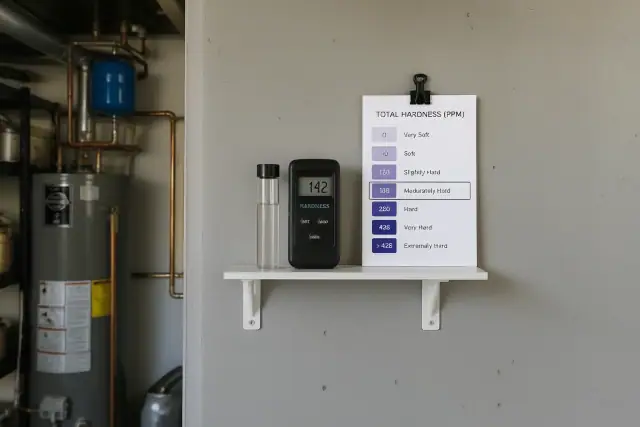
Hard water testing measures calcium and magnesium minerals that cause scale buildup. Tempe water is commonly hard to very hard, and your provided content notes typical Tempe hardness ranges around 200–300 mg/L as calcium carbonate, or roughly 12–17 grains per gallon. The City of Tempe also explains that grains per gallon can be calculated by dividing hardness in mg/L by 17.1, and USGS classifies water above 180 mg/L as very hard.

Testing hardness helps determine whether you need a water softener, salt-free conditioner, scale-reduction system, or a filtration and softening combination. It can also help explain white scale, spots on dishes, dry-feeling skin, soap scum, and appliance buildup.

Chlorine, Chloramine, Taste & Odor Testing

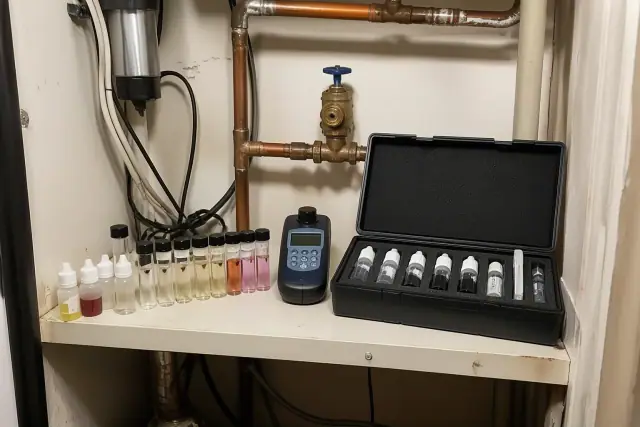
Water quality testing kit and digital meter on a shelf with copper pipes in a Tempe, AZ apartment mechanical closet.

Chlorine and chloramines are used in municipal water treatment, but they can affect taste, odor, and the way water feels for drinking, cooking, showering, and cleaning. Testing helps determine whether carbon filtration, catalytic carbon, under-sink filtration, or whole-home filtration may be the right solution.

If your water smells chemical, tastes like a pool, or makes coffee and tea taste off, chlorine and chloramine testing can help identify the cause instead of guessing.

TDS, pH, Sediment & Turbidity Testing

Water quality testing equipment on a workbench in a utility closet in Tempe, AZ.

TDS, pH, sediment, and turbidity testing helps evaluate overall water quality, dissolved mineral content, visible particles, and cloudiness. These readings are useful for identifying whether you may need reverse osmosis, sediment filtration, whole-home filtration, or system maintenance.

TDS testing can help explain taste and drinking water concerns, while sediment and turbidity testing can reveal particles that may clog filters, fixtures, RO membranes, carbon filters, and appliances.

Heavy Metals, Lead, Copper, Nitrate & Arsenic Testing

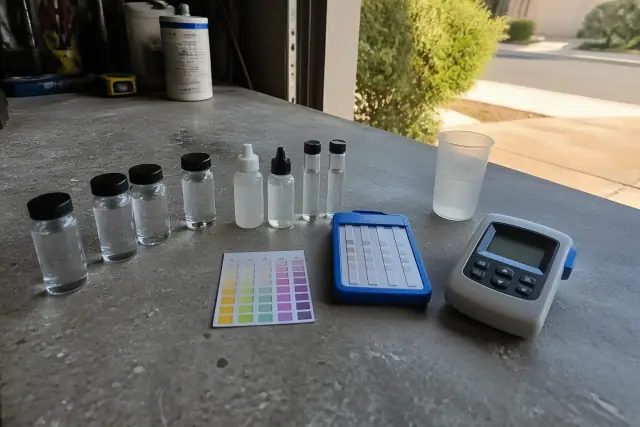
Water testing kit with vials and digital monitor on a garage workbench in Tempe, AZ.

Some water quality concerns are not visible, and you may not taste or smell them. Lead, copper, arsenic, nitrates, and certain other contaminants require targeted testing. This is especially important for older homes, properties with aging plumbing, or homes with brass fixtures and copper lines.

For lead and copper concerns, a first-draw sample after water has sat in the pipes can help identify fixture or plumbing-related leaching. EPA’s Lead and Copper Rule uses action levels of 15 ppb for lead and 1.3 ppm for copper in drinking water sampling.

PFAS and Advanced Lab Water Testing

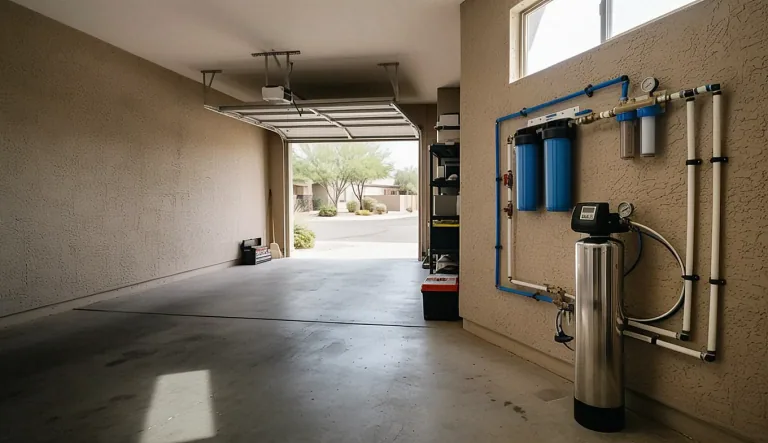
Water quality testing kit with vials and a digital meter on a workbench against a stucco wall in Tempe, AZ.

PFAS, heavy metals, nitrates, arsenic, and other complex contaminants often require lab testing instead of basic field readings. Tempe publishes annual water quality reports and PFAS information, but a site-specific test can help determine what is present at your tap. The City of Tempe states that its Consumer Confidence Reports explain local water sources and water sampling results for the previous year.

For standard lab panels, your provided content notes that turnaround is often about 5–10 business days. We review the results with you, explain what each reading means, and recommend filtration only when your test results support it.

Water Quality types

Types of Water Quality Testing

Different water concerns require different testing methods. The right water test depends on whether you are concerned about drinking water, hard water scale, chlorine taste, visible sediment, PFAS, heavy metals, well water, or an existing filtration system.

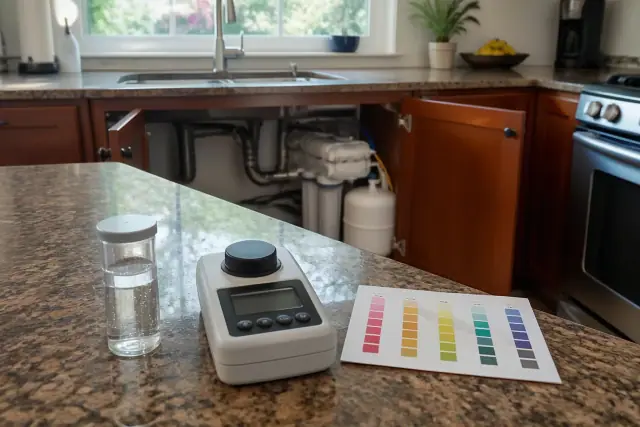
Water quality testing kit with vials and a digital colorimeter on a granite kitchen island in a Tempe, AZ home.

Basic Home Water Quality Test

A basic home water quality test is a good starting point for homeowners who want to understand the most common local water concerns. It can help identify hardness, chlorine, pH, TDS, taste, odor, and general water quality issues.

  • Good first step before installing a water filter
  • Helps identify hard water and chlorine taste concerns
  • Useful for homeowners comparing filtration options
  • Can be performed on-site for fast results
  • Helps determine whether lab testing is needed
Water quality test kit with a glass vial and digital meter on a garage wall in Tempe, AZ.

Hard Water and Scale Test

Hard water testing focuses on calcium and magnesium minerals that cause scale. These minerals can build up on faucets, shower glass, tile, water heaters, dishwashers, washing machines, and plumbing fixtures.

  • Measures hardness in grains per gallon or mg/L
  • Helps determine water softener sizing
  • Useful for scale, soap scum, spots, and dry-feeling water
  • Helps distinguish hardness from iron or sediment staining
  • Important before installing a water softener or conditioner
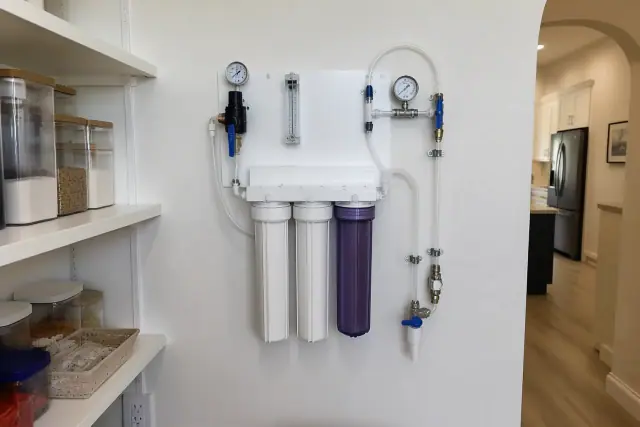
Professional water testing panel with clear tubes and gauges mounted on a pantry wall in a home in Tempe, AZ.

Drinking Water Test

A drinking water test focuses on the water you use for drinking, cooking, coffee, tea, ice, and bottle filling. This test may include TDS, chlorine, lead, PFAS, heavy metals, nitrates, arsenic, taste, odor, and other concerns depending on the panel selected.

  • Helps determine whether reverse osmosis is needed
  • Useful for kitchen taps, refrigerator lines, and RO faucets
  • Can identify taste, odor, TDS, and contaminant concerns
  • Helps compare under-sink filters and RO systems
  • Supports better drinking water recommendations
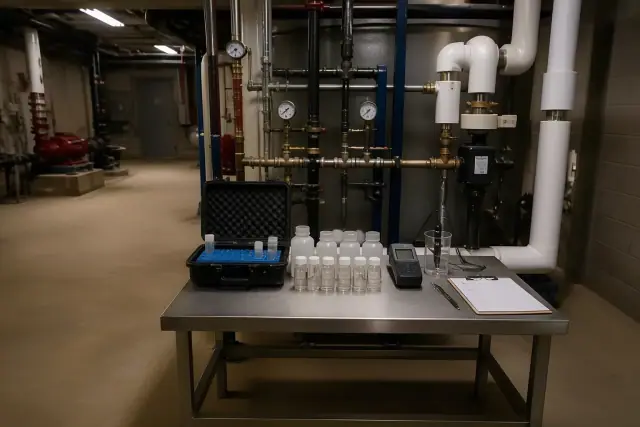
Water sampling vials and testing equipment on a workbench in a commercial mechanical room in Tempe, AZ.

PFAS and Emerging Contaminant Test

PFAS testing is used when homeowners are concerned about PFOA, PFOS, and other forever chemicals. Because PFAS cannot usually be confirmed with a simple visual inspection or taste test, lab testing is the best way to evaluate the issue.

  • Tests for PFAS compounds depending on panel selected
  • Useful before installing PFAS-rated filtration
  • Helps compare RO, activated carbon, GAC, and specialty media
  • Can be used for residential or commercial properties
  • Supports before-and-after performance verification
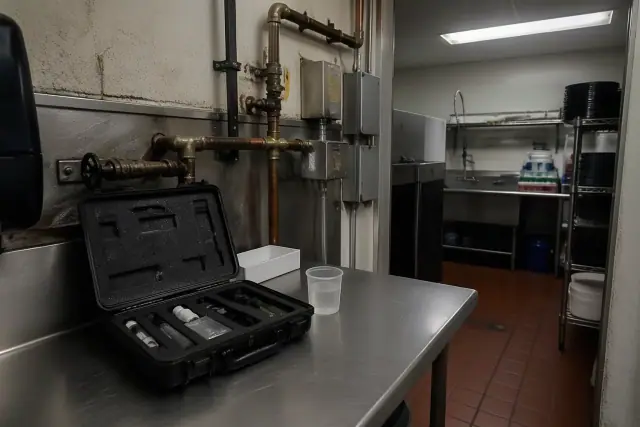
Water quality testing kit on a stainless steel prep table in a Tempe, AZ restaurant utility area.

Lead, Copper and Older Plumbing Test

Older homes may have fixtures, solder, or plumbing components that affect water quality after it leaves the municipal system. Lead and copper testing can help identify whether metals are present at the tap.

  • Useful for older homes and aging plumbing systems
  • May include first-draw and flush samples
  • Helps identify fixture-related leaching
  • Can be paired with pH and corrosion-related testing
  • Helps determine whether filtration, plumbing repair, or both may be needed
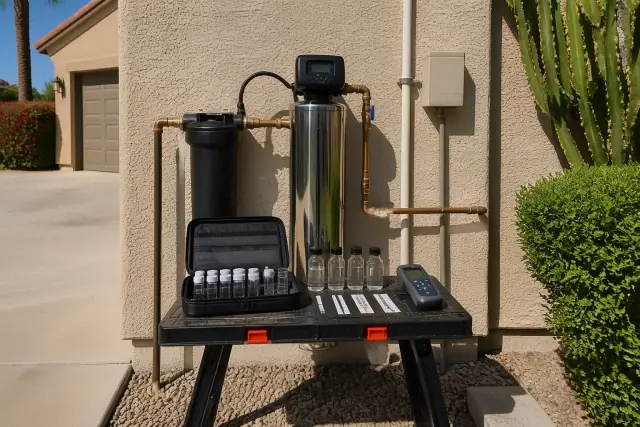
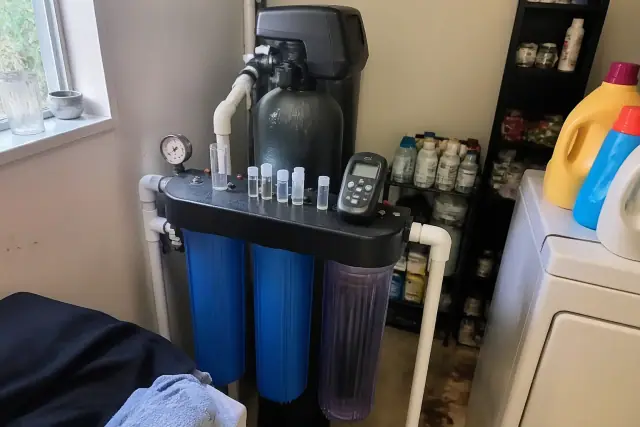
Water testing equipment and sample vials on a filtration system in a laundry room in Tempe, AZ.

Well Water and Specialty Lab Testing

Some properties need more detailed testing, especially if they are on well water or have unusual taste, odor, staining, bacteria concerns, or recurring plumbing issues. Specialty lab testing can provide deeper analysis than a basic on-site test.

  • Useful for well water, rural properties, and complex water issues
  • May include bacteria, nitrates, arsenic, iron, manganese, PFAS, and metals
  • Helps identify contamination not visible at the tap
  • Supports custom filtration and treatment design
  • Recommended when standard testing does not explain the problem
Choosing a Water Test

Choosing the Right Water Test

The right water test depends on your goals. Some homeowners only need a basic water test before choosing a softener or filter. Others need a detailed lab panel for PFAS, lead, nitrates, arsenic, or well water concerns.

Based on Your Main Concern

The first step is identifying what prompted the test. Scale, spots, and dry-feeling water point toward hardness testing. Chlorine smell points toward disinfectant testing. Sediment or cloudiness points toward turbidity and particle testing. Drinking water concerns may require a broader lab panel.

We help match the test to the concern so you do not overpay for unnecessary analysis or miss an important issue.

Based on Municipal Water vs. Well Water

Municipal water testing often focuses on hardness, chlorine, TDS, sediment, PFAS concerns, lead, copper, and taste or odor. Well water testing may need to include bacteria, nitrates, arsenic, iron, manganese, pH, and other site-specific issues.

The correct panel depends on your water source and property type.

Based on Older Plumbing or Fixture Concerns

Older homes may need lead and copper testing because water can change as it passes through interior plumbing. Homes built before modern lead restrictions may have fixtures or solder that require closer attention.

First-draw and flush sampling can help identify whether the issue is related to standing water in pipes, fixtures, or broader plumbing.

Based on Existing Filtration Equipment

If you already have a water softener, carbon filter, sediment filter, whole-home system, or reverse osmosis unit, testing can show whether the system is still performing properly.

We can compare untreated water, filtered water, refrigerator water, and RO output when needed.

Based on Before-and-After Results

Before-and-after testing is useful when installing or servicing filtration equipment. The first test shows baseline water quality, and the second test helps confirm whether the system is working as intended.

This is especially helpful for RO systems, PFAS filters, carbon filters, and maintenance visits.

What Sets Us Apart

Why Choose Tempe Water Filtration for Water Quality Testing?

Choosing the right water testing company matters. Tempe Water Filtration provides local water knowledge, clear explanations, professional testing, and filtration recommendations based on real results.

Get a Free Assessment

Local Tempe Water Quality Experience

Our team understands common Tempe water concerns, including hard water minerals, chlorine taste and odor, sediment, TDS, PFAS concerns, lead and copper concerns, and drinking water preferences.

Because we work with local homes and businesses, we can interpret results through the lens of Tempe-area water conditions.

Free Water Testing Before Recommendations

We start with testing before recommending equipment. This helps identify whether your property needs whole-home filtration, reverse osmosis, water softening, carbon filtration, sediment filtration, PFAS filtration, or no system at all.

This approach helps you make a better decision before investing in water treatment.

No Generic Water Filter Packages

We do not recommend the same system for every property. Your recommendation is based on water test results, plumbing layout, household size, usage needs, budget, and whether you want drinking water filtration, whole-home treatment, softening, or specialty filtration.

This helps avoid unnecessary equipment and undersized systems.

Before-and-After Water Quality Reports

When a filtration system is installed or serviced, before-and-after testing can help show measurable changes in water quality.

This gives you a clearer understanding of what your system is doing and whether maintenance or upgrades are needed.

Residential & Commercial Testing

Tempe Water Filtration provides water quality testing for homes, offices, restaurants, break rooms, rental properties, retail spaces, commercial buildings, and small businesses.

Commercial properties may need testing for drinking water, equipment protection, ice machines, coffee systems, boilers, dishwashers, or employee/customer water stations.

Professional Guidance After Testing

Test results are only useful when they are explained clearly. We review your report, explain what matters, compare treatment options, and help you understand the next step.

If no major treatment is needed, we will tell you. If filtration is recommended, we explain why.

How it works

Our Water Quality Testing Process

Our process is designed to make water testing simple, clear, and useful. From scheduling to results review, we help you understand what is in your water and what to do next.

01.

Schedule Your Water Test

Call Tempe Water Filtration or submit the estimate form to request water testing. Your provided content notes that Tempe testing appointments are typically scheduled within 1–3 business days.

We will ask about your concerns, water source, property type, existing filtration equipment, and whether you want basic testing or a more detailed lab panel.

02.

Collect Water Samples

We collect samples from the water points that matter most. This may include the kitchen tap, refrigerator line, RO faucet, bathroom tap, utility sink, hose bib, or water before and after an existing system.

For certain lab tests, samples may be collected in certified, pre-labeled containers with chain-of-custody documentation.

03.

Test for Key Water Quality Concerns

Depending on the test, we may check hardness, chlorine, chloramines, TDS, pH, sediment, turbidity, lead, copper, nitrates, arsenic, PFAS, iron, manganese, bacteria, or other concerns.

The test panel is selected based on your goals and risk factors.

04.

Review Your Results

Once results are available, we explain what each reading means. We compare relevant findings to accepted thresholds, practical household impacts, and filtration options.

We focus on clear explanations instead of technical confusion.

05.

Recommend the Right Solution

Based on the results, we may recommend reverse osmosis, whole-home filtration, water softening, carbon filtration, sediment filtration, PFAS filtration, UV purification, filter replacement, or no immediate treatment.

Your recommendation is based on your water data, property needs, and budget.

06.

Confirm Performance Over Time

If a system is installed or serviced, we can provide before-and-after testing and future maintenance checks. This helps confirm performance and allows your system to be adjusted if water conditions change.

Long-term testing is useful for homes with complex water concerns, businesses, well water, and existing filtration systems.

GET CLEANER WATER

Schedule Water Quality Testing in Tempe

Better water starts with better information. Tempe Water Filtration provides water quality testing for homes and businesses throughout Tempe, AZ and the Phoenix metro area so you can understand your water before choosing filtration, softening, reverse osmosis, or specialty treatment.

WATER FILTRATION HELP

Water Quality Testing FAQs

Water quality testing helps you understand your water before choosing a filtration system. These FAQs answer common questions homeowners and businesses ask before scheduling water testing in Tempe.

Call Our Experts

A water quality test can check for hardness, chlorine, chloramines, TDS, pH, sediment, turbidity, lead, copper, arsenic, nitrates, PFAS, iron, manganese, bacteria, taste, odor, and other concerns depending on the test panel.

Yes. Tempe homes often deal with hard water, chlorine taste and odor, sediment, TDS, and drinking water concerns. Testing helps determine whether you need filtration, softening, reverse osmosis, PFAS treatment, or system maintenance.

A good baseline test may include hardness, TDS, chlorine or chloramines, pH, sediment, lead, copper, arsenic, nitrates, and PFAS depending on the property. Homes with older plumbing or unusual taste, odor, or staining may need additional testing.

The City of Tempe water report summarizes municipal water sources and water sampling results for the previous year. An in-home test checks the water coming from your specific faucet, refrigerator line, RO system, or plumbing. Both are useful, but they answer different questions.

Hard water means the water contains elevated calcium and magnesium minerals. USGS classifies water above 180 mg/L as very hard, and Tempe’s own water hardness FAQ explains how to convert mg/L hardness to grains per gallon by dividing by 17.1.

Water testing appointments are typically scheduled within 1–3 business days, depending on availability and service area. Lab test turnaround is generally about 5–10 business days for standard panels.

Samples may be collected from the kitchen tap, refrigerator line, RO faucet, bathroom tap, utility sink, hose bib, or before and after an existing filtration system. The sample points depend on what you want to test.

Yes, older homes may benefit from lead and copper testing, especially if they have aging plumbing, older fixtures, or suspected corrosion. EPA’s Lead and Copper Rule uses action levels of 15 ppb for lead and 1.3 ppm for copper in tap sampling.

A first-draw sample is collected after water has sat in the plumbing for several hours. This can help identify whether lead or copper may be leaching from fixtures, solder, or internal plumbing.

Yes. Testing helps determine whether your water needs a sediment filter, carbon filter, water softener, reverse osmosis system, PFAS filter, UV purifier, or a combination system.

Yes. Every system recommendation starts with water testing. We use your results to recommend equipment based on your actual water quality, not a generic package.

Yes. Before-and-after testing is available for installations, maintenance visits, and system performance checks. It helps verify whether the system is improving the target water quality concerns.

Yes. We can test filtered water from an RO faucet, refrigerator line, under-sink filter, whole-home system, or other installed filtration equipment to see whether it is still performing properly.

Cost depends on whether you need a basic on-site test, expanded panel, lab test, PFAS test, heavy metals panel, well water panel, or before-and-after testing. Tempe Water Filtration provides clear pricing before testing begins.

We review your results with you, explain what they mean, and recommend the right next step. That may be whole-home filtration, reverse osmosis, water softening, carbon filtration, sediment filtration, PFAS treatment, filter replacement, or no immediate system if your water does not require treatment.

Call or request a free estimate online. We will schedule your water consultation, test your water, explain your options, and provide a clear quote for Tempe water filtration installation.